
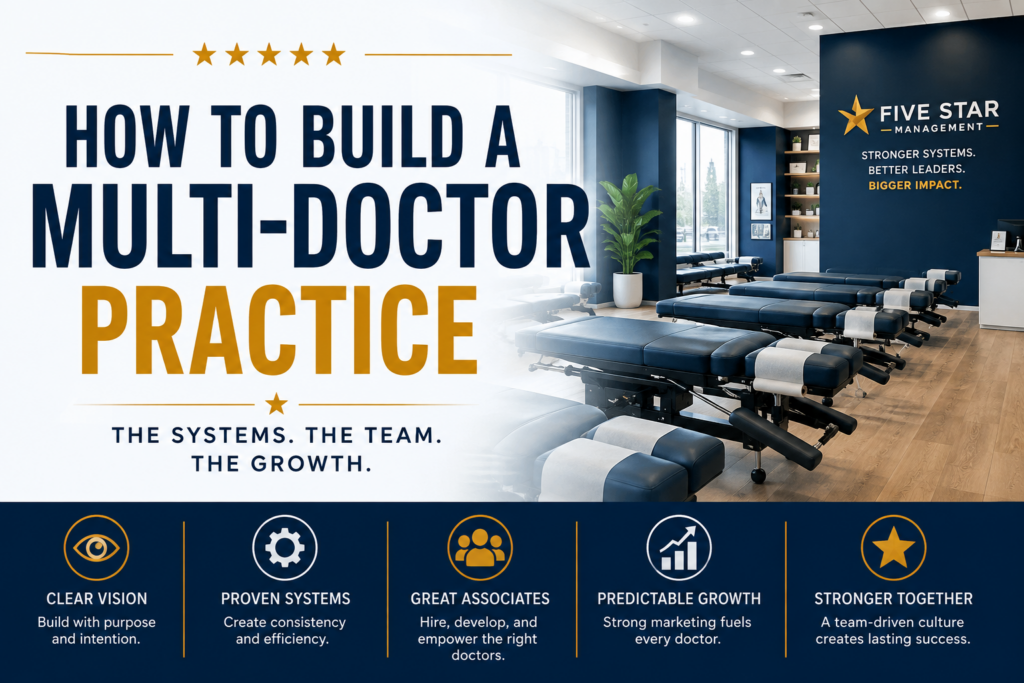
How to Build a Multi-Doctor Chiropractic Practice
For many chiropractors, the dream isn’t simply to own a busy practice. It’s to build a clinic that serves more patients, develops great doctors, creates

For many chiropractors, the dream isn’t simply to own a busy practice. It’s to build a clinic that serves more patients, develops great doctors, creates
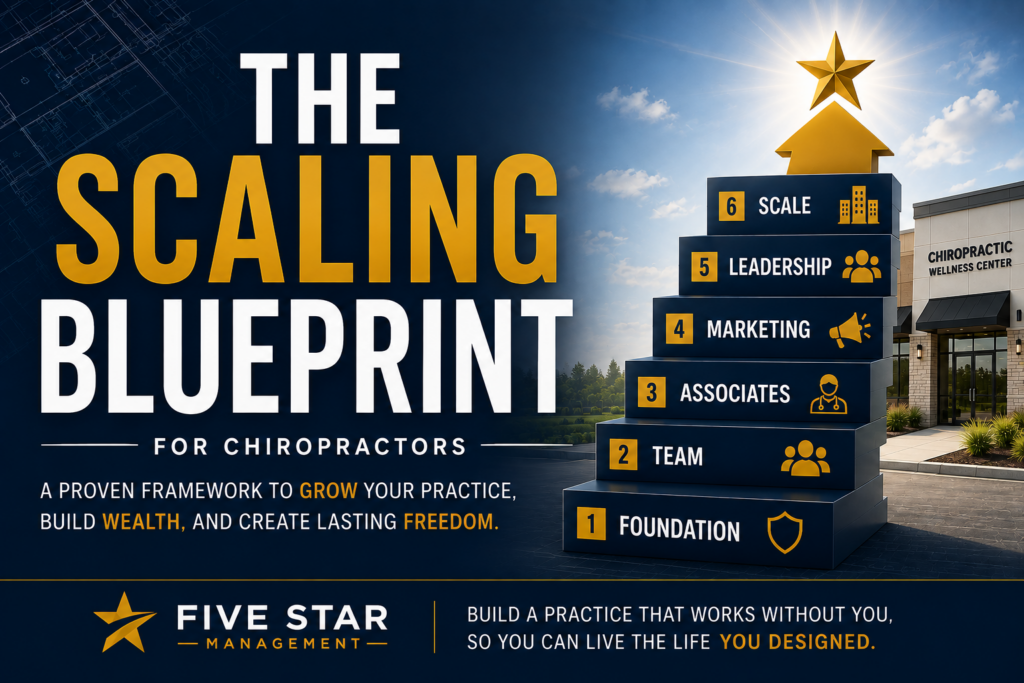
Growing a chiropractic practice is exciting. It’s also where many chiropractors begin to feel overwhelmed. More patients create more responsibility. More staff create more questions.
Stress is one of the biggest reasons chiropractors lose their passion for practice ownership. Many clinic owners entered the profession to help people, build financial

Current and cutting edge guidance to profit and joy in practice. Glad to have finally found them. I made an extra 75k this year and am moving out of my own personal “Groundhog Day” hell toward a joyous life.

I have been a client multiple times over the last 25 years. Excellent coaching, relevant and fresh content and have my best interest at heart.

Exceptional!! Definitely recommend. Game changer

I was a client years ago and just rejoined in Jan. 2018. Dr. Lloyd helped me learn how to attract and retain great patients years ago, and now with my new practice in Portland, OR. I'm super excited to be back with him and FSM. Thanks a lot Dr. Lloyd!

Best Organization ever. Very good and educated seminars. Dr Lloyd and Dr. Birnbach are the best.

Great program. Drs Noel and George provide powerful and highly relevant material that is current with changing times and tailored to our individual offices. I greatly appreciate the ability to grow while serving patients ethically and congruently.

So many ideas to promote my office. Like they say, if you can't find something you like on the menu, your not hungry!

I always look forward to going to the 5 star seminars to get recharged and callobrated for our office. In the previous 2 years we have grown personally and professionally in our practice with helping more people and having more fun! I am confident that we are able to train other Doctor’s and team members to be their very best. The steps are simple and Drs. Noel, George, and Leah are excellent and will help you with what you need! #bestdecision EVER!

Dr Lloyd is very precise and gives you the tools that can be valuable to not only uplift your practice but also improve the psyche to know that you can get to a target with his steps<br>Thank you for terrific weekend.<br>Dr Jignesh Bhakta. I would throw in a six star but they only allow 5.

Dr. Lloyd & Dr. Birnbach have been instrumental in providing us with the skills to make our practice grow. Thanks to their guidance we are on target to make our goals a reality. Thank you Five Star Management. You all are truly a class act operation.

Having great time at the new patient seminar. Dr. Loyd and Dr.<br>Birnbach dishing out great info.<br><br>Dr. Guyton

Fantastic work teaching chiropractors to expand their offices. Dr. Lloyd and Dr. Birnbach have been instrumental in helping us create the practice of our dreams and sharing chiropractic with our community!<br>Thanks<br>Dr. J

Five Star has changed my practice and my life. My stress is down, my success is up and my patients are happier than ever!

I love the seminars. Always great content to help a chiropractic or alternative medicine practice run smoothly. Thanks for your help!

Fantastic group! They helped me start a successful practice.

It is hard to imagine a better organization to coach and advise chiropractic businesses than Five Star Management. Every person at Five Star is available to whatever I need of them at the moment. I have valued my personal coaching relationship with Dr. Noel Lloyd. Everyone at my clinic knows that this year will be our best year ever in practice. Thanks to their guidance I have hired my first associate chiropractor and we are about to rip it up. No looking back!

Fivestar is a focused, step by step, approach to getting your practice in shape and then shooting for the stars.

Best year ever after best year ever, love this program. Thank you Dr. Lloyd!

Dr. Lloyd and Dr. Birnbach are fantastic! I learn something new every time I go to a seminar! They provide great feedback and offer resources to make your practice operate with ease! Thanks so much

I have been a member for 2 years. Since joining I have hired an associate, a community outreach assistant and had my first child with a 16 week maternity leave. I have had best ever numbers across the board and have helped more people than ever! Plus I have more time off to spend with my family. 5 star is hands down the best! Thanks Dr Llyod and the 5 star team because you guys rock!

Dr Noel Lloyd has been amazing to work with. He can help with any situation and can customize it for your office. Not the typical practice in a box only one way to do things. He's help make practicing fun again as well as increasing my profits.

Fivestar has helped me streamline my clinic procedures to provide excellent care to our patients in a low-stress atmosphere, with plenty of time for each patient. Thank you for helping me care for our patients better!"

My husband and I have been clients for two years. We have been thrilled with five star. The coaching is custom tailored to fit the needs of your practice and the vision that you have for your practice. Dr. Noel Lloyd, Dr.George Birnbach, Dr. Leah Meadows and their fantastic team do not have their own agenda. They listen to you and help you to reach your goals. The seminars are fantastic. I always come away with a very long to do list. The information is relevant to chiropractic practices today.We would highly recommend five star to any doctor looking to help more people, have more fun, make more money, or reduce their stress.

I've been a client for over 4 years now. Solid systems, solid support, great staff. I have tripled my my income in the last 4 years without working additional hours and the seminars help not only me, but help train and involve my staff. Dr. Lloyd, Dr. Birnbach, and Dr. Meadows are all truly committed to getting you to the next level and beyond. The clients in Five Star vary from the beginner to the seasoned multi practice owner with multiple associates making it relevant for just about anyone. Thanks for all your help!

My Name is Dr. Ricky Hanks. I have been in practice now fore 30 years.I am in my second year as a client in 5 Star Management. The whole team is amazing. The front line ladies of Amanda and Brittany are wonderful. The personalized coaching form of Dr. Lloyd is refreshing, caring, and based in chiropractic wisdom. Drs. George Birnbach and Leah Meadows add a special variety of marketing wisdom, business organization, and chiropractic office skills to the overall program. The 5 Star website is a virtual gold mine of wisdom and webinars that are taking me to the next level of excellence.<br><br>The whole 5 Star program has been an experience that has returned more than 10 times a ROI (Return on my Investment) in this program just in my first year.<br><br>Dr. Lloyd has been a compassionate, caring and understanding consultant/coach who has led me to be a better husband, father, grandfather,chiropractor,business owner, and person overall.<br>He has taught me to communicate better and more effectively with my team and my patients. His business/financial training has re-enforced that life is a fair and equitable exchange.<br><br>Have more Fun...Help more People...Be more Successful !!!<br><br>I highly recommend 5 Star to old veteran Chiropractors like me and especially young Chiropractors still in school or just fresh out of school. I only wish I had started with the Five Star Team 30 years ago!!!<br><br>Ricky L. Hanks DC


